
How does assisted living promote senior mobility?
Assisted living can support senior mobility by combining safe surroundings, regular movement opportunities, personal assistance, and timely attention to changes in walking ability. The goal is not simply to help a resident get from one room to another. It is to preserve independence, reduce avoidable falls, and help each person remain as active as safely possible.
Mobility may include walking, standing from a chair, transferring between a bed and wheelchair, using stairs, or moving safely outdoors. Assisted living settings are designed to make these activities more manageable while allowing residents to do as much as they can for themselves.
Support is generally adjusted to the individual. A resident who walks independently may need only well-maintained pathways and encouragement to stay active. Another resident may need help with transfers, a walker, or supervision during longer distances.
Why does daily movement matter for older adults?
Regular movement helps maintain strength, balance, flexibility, circulation, and confidence. It can also make ordinary activities—such as dressing, bathing, eating, and getting to the dining room—less tiring.
Reduced activity can create a cycle. A person may avoid walking because of fear or weakness, lose more strength as a result, and then become even less confident. Assisted living can interrupt that pattern by building safe movement into the daily routine.
Movement does not have to mean strenuous exercise. Useful activity may include:
- Walking to meals or common areas
- Standing and sitting with proper support
- Gentle stretching
- Participating in seated or chair-based exercises
- Practicing safe transfers
- Walking short distances several times during the day
- Taking part in gardening, crafts, music, or other activities that involve reaching and changing position
Small amounts of activity spread throughout the day may be more realistic and sustainable than a single demanding workout.
How are assisted living environments designed to reduce mobility hazards?
The physical setting can either support movement or make it harder. Assisted living communities typically use features such as clear walkways, adequate lighting, handrails, non-slip flooring, and seating areas where residents can rest.
Good design also considers visibility and routine. Residents are more likely to move safely when important destinations are easy to identify and routes are free of clutter. Bathrooms, bedrooms, dining areas, and activity spaces should be arranged so that residents do not have to navigate unnecessary obstacles.
Lighting deserves special attention during evenings and early mornings. Shadows, glare, and dim hallways can make it difficult to see changes in flooring or objects in the walking path. Nightlights and accessible light switches may help residents move more confidently after dark.
In Corry, winter weather adds another consideration. Snow, ice, wet footwear, and darker seasonal conditions can increase the difficulty of entering or leaving a building. Indoor walking opportunities, prompt attention to slippery areas, and suitable footwear can help residents remain active when outdoor conditions are unsafe.
What role does personal assistance play?
Personal assistance can improve mobility when it is provided in a way that supports ability rather than replacing it. A resident may be encouraged to stand independently while a caregiver remains nearby, or to walk with a familiar mobility aid instead of being routinely transported.
Appropriate assistance may include:
- Providing an arm for balance when needed
- Helping with shoes, clothing, or mobility equipment
- Guiding a resident through a transfer
- Offering reminders to use a walker or cane
- Accompanying someone on an unfamiliar route
- Allowing extra time so the resident does not feel rushed
Too much assistance can sometimes lead to less activity. If a person is able to complete part of a task safely, allowing that participation may help preserve strength and confidence. The right level of support can change from day to day depending on fatigue, illness, pain, medication effects, or other circumstances.
Can assisted living help prevent falls?
Assisted living can reduce some fall risks, but it cannot eliminate falls completely. Fall prevention usually involves several parts working together rather than one device or rule.
Staff may observe changes such as slower walking, difficulty rising from a chair, shuffling steps, increased hesitation, or a new need to hold onto furniture. These changes can be early signs that a resident needs a different level of support or a review of current mobility equipment.
Other factors may also affect fall risk:
- Poorly fitting footwear
- Vision changes
- Dizziness when standing
- Weakness after an illness
- Dehydration
- Medication side effects
- Pain in the feet, hips, knees, or back
- Clutter or inadequate lighting
- Rushing to the bathroom

A fall or near-fall should not be dismissed as an isolated event. Repeated near-falls may indicate that the resident’s routine, equipment, environment, or health needs closer attention.
How do exercise and rehabilitation support mobility?
Many assisted living residents benefit from structured exercise or rehabilitation, particularly after hospitalization, illness, or a decline in strength. Exercises may focus on leg strength, balance, posture, flexibility, and endurance.
Activities should match the resident’s abilities and health status. A safe program may involve seated exercises at first, followed by supported standing, short walks, or balance practice. Progress should be gradual. Pain, unusual shortness of breath, chest discomfort, faintness, or sudden weakness are reasons to stop activity and seek appropriate medical attention.
Rehabilitation services are different from ordinary activity programming. Rehabilitation generally addresses a specific functional problem, such as recovering from surgery or relearning safe transfers. Daily activity supports general function and routine. Both may contribute to better mobility, but they serve different purposes.
What mobility equipment may be used?
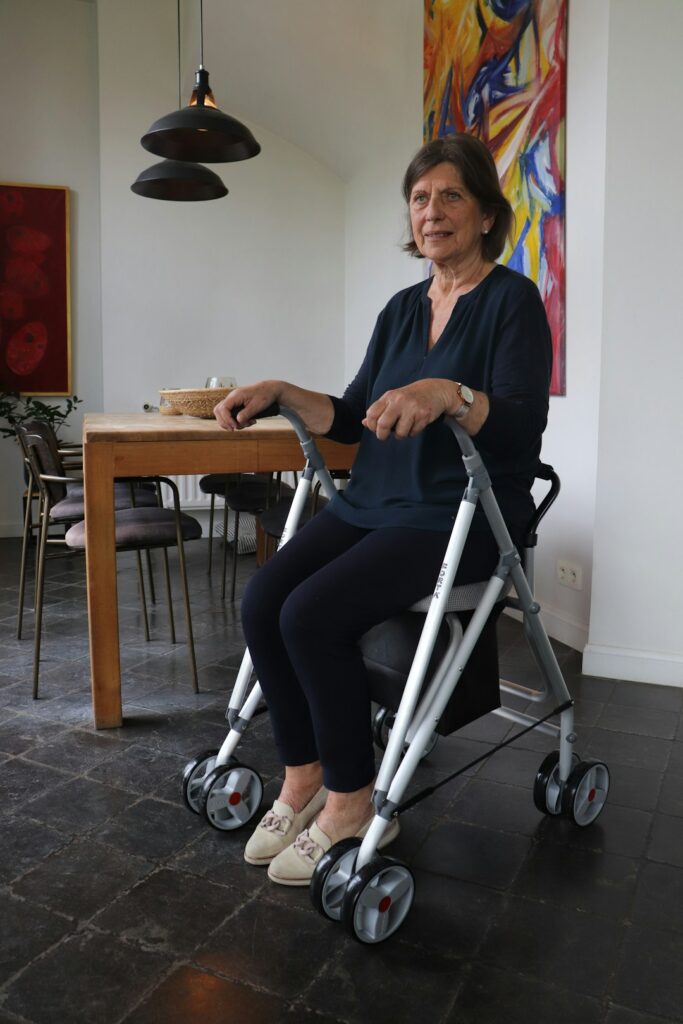
Mobility equipment can provide stability and reduce strain when it is correctly selected and adjusted. Common examples include canes, walkers, wheelchairs, transfer poles, grab bars, and raised toilet seats.
Equipment is not automatically safer simply because it offers more support. A walker that is too tall, a wheelchair with poorly positioned footrests, or shoes that slide inside the pedals can create additional risks. Residents should use equipment according to current instructions, and changes in walking ability should be reviewed when equipment no longer seems suitable.
A mobility aid should support natural movement without forcing a resident into an awkward position. It should also be kept within reach but not placed where the resident must stretch, twist, or climb to retrieve it.
How can families support mobility without creating pressure?
Families can encourage movement by focusing on confidence, routine, and realistic goals. Helpful questions include:
- Is the resident walking less than before?
- Does the person avoid certain areas because of fear?
- Are there new difficulties with shoes, stairs, transfers, or bathing?
- Has a cane or walker become harder to use?
- Does fatigue occur earlier in the day?
- Have there been falls or near-falls?
Visits can include a short walk, a seated exercise session, or participation in a familiar activity rather than only sitting for long periods. Encouragement should not become pressure. A resident who is in pain, dizzy, unusually tired, or recovering from illness may need rest and further evaluation instead of more activity.
Mobility is a changing ability, not a permanent label. With safe surroundings, appropriate assistance, regular movement, and attention to early warning signs, assisted living can help older adults remain active in daily life while preserving as much independence as possible.
