
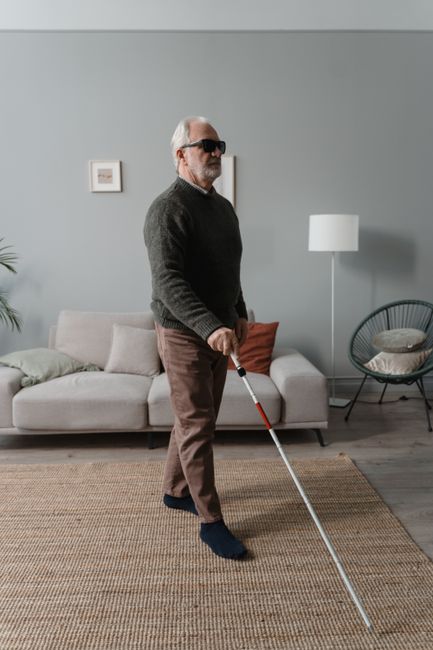
For residents and families in Corry, PA, assisted living can offer a safer setting for an older adult whose vision has changed. The most effective adaptations are usually practical rather than complicated: better lighting, clear walkways, strong color contrast, consistent room arrangements, and communication methods that do not depend only on small print.
Vision loss is not the same for every person. Some seniors have difficulty seeing in dim light, while others experience glare, reduced peripheral vision, blurred central vision, or trouble judging steps and distances. A useful plan begins with the individual’s abilities, habits, and daily routines.
What changes help seniors with visual impairments move safely?
The living environment should make important features easy to see, recognize, and reach. A familiar layout also reduces confusion and unnecessary falls.
Helpful environmental adaptations include:
- Bright, even lighting in bedrooms, bathrooms, hallways, dining areas, and activity spaces
- Night-lights or low-level pathway lighting between the bed and bathroom
- Reduced glare from polished floors, windows, mirrors, and shiny countertops
- Clear contrast between walls, doors, floors, furniture, and handrails
- Unobstructed hallways and walkways
- Furniture placed in consistent locations
- Removal of loose rugs, cords, clutter, and low objects
- Clearly marked changes in floor level, steps, and ramps
- Handrails that can be seen and felt easily
Lighting should be bright enough for the task without creating harsh reflections. A senior who reads comfortably in a well-lit room may still need additional lighting for medication labels, grooming, meals, or navigating a dim hallway.
Why do contrast and color matter?
Color contrast helps a person distinguish one object from another. For example, a dark-colored toilet seat may be easier to see against a light bathroom surface, while a light plate may be easier to recognize on a darker table.
Useful contrast examples include:
- A dark handrail against a light wall
- A brightly contrasting edge on the first and last stair
- Door frames that stand out from surrounding walls
- Light switch plates that contrast with the wall
- Dark place settings on a light tablecloth
- Large, high-contrast labels on drawers and cabinets
Color alone is not always enough. Some forms of vision loss make certain colors difficult to distinguish, and glare can erase contrast. Matte or non-glare finishes, larger lettering, and clear shapes often work better than decorative patterns.
How should assisted living rooms be arranged?
A predictable room arrangement can make daily tasks easier and reduce hesitation. The bed, telephone, walker, glasses, tissues, and personal alert device should be placed where the resident expects them to be.
Staff and family members should avoid moving furniture or personal items without explaining the change. If an object must be relocated, the resident should be told what moved and where it is now.
A room review may include:
- Checking whether the resident can identify the bathroom entrance
- Keeping frequently used items within easy reach
- Making sure doors open fully and are not blocked
- Using large-print or tactile labels on drawers and controls
- Placing a contrasting strip or marker near important edges
- Confirming that mobility equipment does not interfere with walking routes
A consistent layout is especially helpful for residents who have both vision loss and memory changes. Familiarity can support independence even when eyesight is limited.
What adaptations are useful in bathrooms?
Bathrooms require extra attention because wet surfaces, glare, tight spaces, and changes in floor level can increase the risk of falling.
Helpful measures may include:
- Bright, evenly distributed lighting at the sink, toilet, and shower
- Grab bars that contrast with the wall
- Non-slip flooring with limited glare
- A shower seat when standing is difficult
- Clearly identifiable hot and cold controls
- Large, high-contrast markers on faucets
- Toiletries stored in consistent, easy-to-reach locations
- A contrasting toilet seat and visible toilet paper holder
- A night-light or illuminated path to the bathroom
A bathroom should be checked at different times of day. Winter darkness in the community can make early mornings and evenings particularly challenging, especially when a room relies heavily on natural light.
How can staff communicate more effectively?
Good communication is an adaptation in itself. Staff should identify themselves before speaking, use the resident’s name, and explain what is happening before touching or assisting.
Helpful communication habits include:
- Speak directly to the resident rather than only to a companion
- Say when entering or leaving the room
- Use specific descriptions such as “the chair is two steps to your left”
- Avoid pointing without explaining where an object is located
- Describe food placement using a clock-face method when helpful
- Announce changes in furniture, routines, or dining locations
- Ask before providing physical assistance
- Give adequate time for the resident to respond or move
A common misconception is that speaking loudly helps someone with vision loss. Volume should be adjusted for hearing needs, not vision. Clear language and useful descriptions are generally more helpful than shouting.
What about medications, meals, and personal items?
Vision loss can make small labels, similar containers, and printed instructions difficult to manage. Medication systems should be reviewed as part of the resident’s support plan, particularly if the person has difficulty reading labels or distinguishing pills.
Practical supports may include:
- Large-print instructions
- High-contrast labels
- Tactile markers or distinctive container shapes
- Verbal explanation of medication times
- A consistent location for personal items
- Assistance with reading menus, activity notices, and appointment information
- Plates and cups that contrast with the table surface
Any medication assistance must follow the residence’s procedures and the resident’s assessed needs. Family members should not assume that a system is working simply because medications are being delivered on schedule; the resident should also understand what is being taken and when, to the extent possible.
How can residents prepare for emergencies?
Emergency planning should account for the possibility that a resident may not be able to read signs, see smoke clearly, or navigate an unfamiliar route. Evacuation paths must remain free of furniture, equipment, boxes, and other obstacles.
Residents and families can ask how the residence handles:
- Evacuation for a person who cannot see exit signs
- Power outages affecting elevators, lighting, or communication devices
- Severe winter weather and reduced outdoor visibility
- Staff identification during nighttime emergencies
- Personal emergency information and preferred assistance methods
- Practice drills for residents with visual impairments
Pennsylvania assisted living rules address emergency preparedness, accessible exits, unobstructed passageways, and stair markings for people with vision impairments. These requirements provide a baseline, but an individual support plan may need to go further.
Should a senior with vision loss receive vision rehabilitation?
Vision rehabilitation may help a person use remaining sight more effectively and learn safer ways to complete everyday tasks. It can include training with magnification, lighting adjustments, mobility techniques, technology settings, and household organization.
A primary eye-care provider can help determine whether the vision change is related to a treatable condition or whether a low-vision rehabilitation evaluation would be useful. Sudden vision loss, new flashes or floaters, eye pain, or a rapid change in sight should receive prompt medical attention.
The goal of assisted living adaptations is not to limit a resident’s choices. It is to make ordinary activities—walking to meals, locating personal belongings, reading a notice, using the bathroom, and joining activities—more predictable and manageable. The right combination of environmental changes, respectful communication, and individualized support can help a senior remain involved in daily life while reducing avoidable hazards.
